5 Risks of Satellite Internet
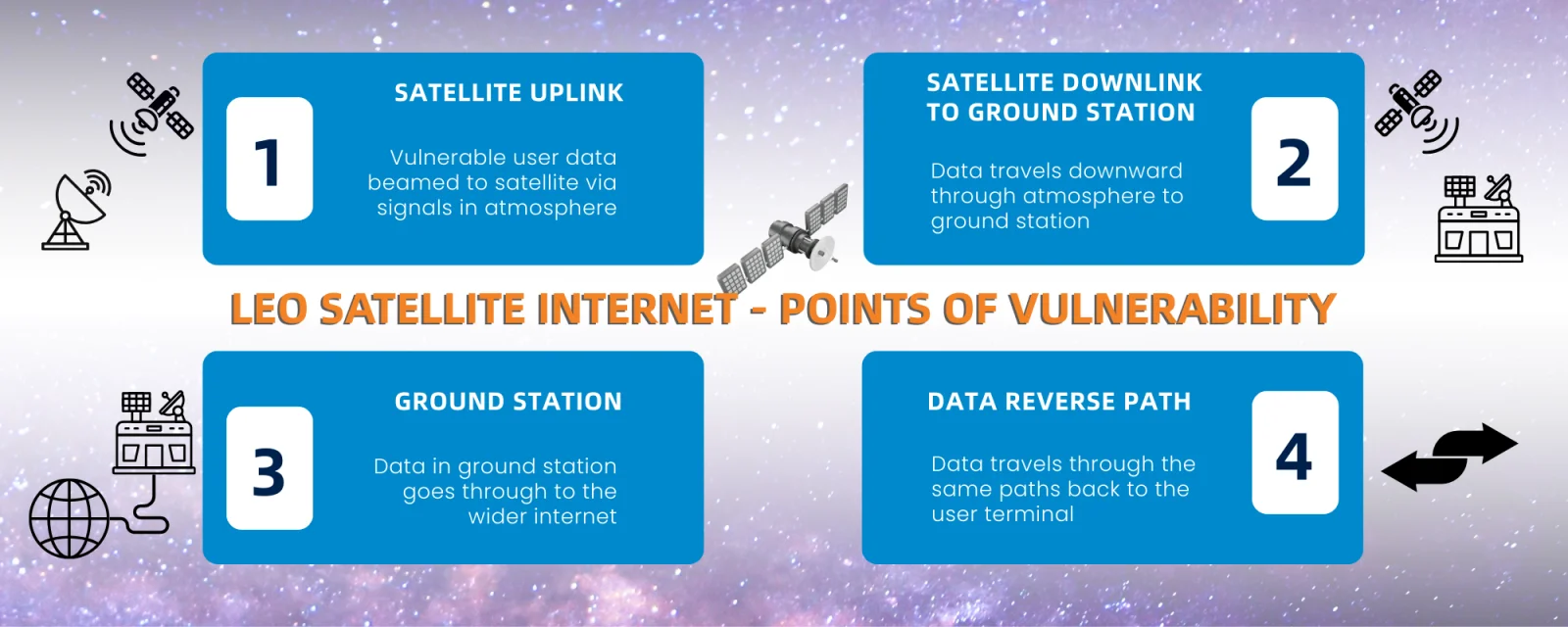
In today's digital landscape, your internet connection is the backbone of your producitvity. Satellite internet has historically served as a stop gap measure for the most remote locations, however it often struggles to compete with the stability and throughput of fixed-fiber networks. For users weighing their options, the "satellite vs. fiber" debate isn't just about raw download speed - it is about technical vulnerabilities that may disrupt your daily operations. Before you commit to a longterm contract, it is important to understand the performance and security gaps that separate these two technologies:
- Data Interception: The most common fear of using satellite internet connections is sensitive data traveling through open air. This data can be easily intercepted with a receiver. Think of satellite broadcasts, like TV, and how they’ve been intercepted in the past. If internet signals are not encrypted, it’s possible to intercept them.
- Privacy and IP Address Tracking: Satellite works differently than ground-based internet like fiber-optic, especially when it comes to your IP address.
- VPN Instability and Latency: For remote workers, a Virtual Private Network is non-negotiable for security. However, satellite internet and VPNs don’t always mix. VPNs require a constant “handshake” between your device and the server. On traditional satellite connections the high latency can cause the VPN to think the connection has dropped, leading to frequent disconnects.
- The “Ground Station” Vulnerability: Your data doesn’t remain in space forever. Once it beams off the satellite it gets sent back down to a ground station. This creates a bottleneck, or a physical choke point for information. If an attacker successfully breaches the ground station, every user dependent on that connection loses connectivity.
- Physical Hardware Hacking: Unlike your router within your home or business, a satellite dish is outside and is accessible to the elements. Security researchers have demonstrated that by physically accessing a satellite dish and using specially made circuit boards, they could produce glitches allowing them to bypass security checks. This may not be a common threat for the casual user but is definitely a concern for enterprise and commercial customers.
With strong encryption satellite connections can be secure enough for use as if you are using a public utility. But don’t take any chances with your most sensitive online transactions and maintain a reliable fiber internet connection with SkyLine/SkyBest.